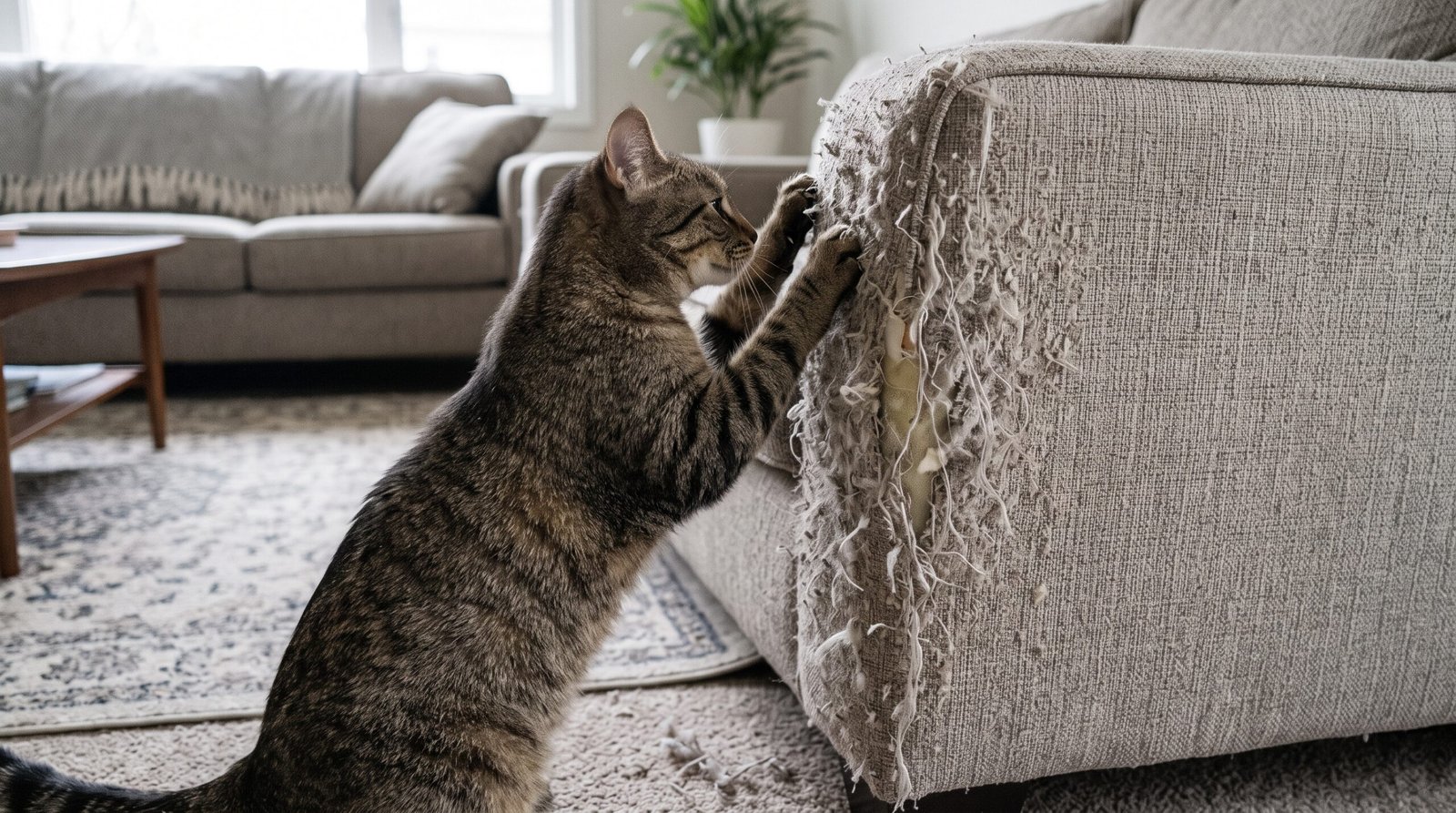
Your couch is shredded. Your curtains are climbing frames. Your counters are a playground. Your cat is destroying your home—and you’re at your wit’s end.
Cat destructive behavior is one of the most common reasons cats are surrendered. But it’s fixable. Here’s what’s driving it and how to stop it.
Key Takeaways
- Destructive behavior is usually boredom, stress, or unmet needs
- Cats need scratching, climbing, hunting, and play outlets
- Provide alternatives—cat trees, scratching posts, puzzle feeders
- Increase daily playtime to reduce boredom
- Never punish—it increases stress and worsens behavior
- Rule out medical issues if behavior changes suddenly
Table of Contents
- Types of Destructive Behavior
- Why Cats Are Destructive
- When Destructive Behavior Signals a Problem
- How to Stop Destructive Behavior
- Enrichment Solutions
- Frequently Asked Questions
Types of Destructive Behavior
Scratching Furniture, doors, curtains Cat Scratching Doors Climbing Curtains, shelves, cabinets Cat Climbing Curtains Counter surfing Kitchen counters, tables Cat Jumping on Counters Knocking things over Glasses, vases, objects Cat Knocking Things Over Chewing Cords, plastic, plants Cat Licking Plastic Bags Digging Plants, carpet, furniture—
| Type | Examples | Related Guide |
|---|---|---|
Why Cats Are Destructive
- Boredom. Under-stimulated cats create their own entertainment. See our guide on kitten biting hands and feet.
- Stress. Changes in environment trigger destructive behavior. See our guide on cat hiding all day.
- Instinct. Scratching, climbing, and hunting are natural behaviors. Cats need outlets.
- Lack of appropriate outlets. No cat tree, no scratching post, no puzzle feeders—cats improvise.
- Attention-seeking. If destruction gets a reaction, cats learn it works. See our guide on cat clinging to me.
- Territorial marking. Scratching leaves scent marks. See our guide on cat tail twitching.
- Medical issues. Pain, illness, and cognitive dysfunction can trigger destructive behavior. See our guide on cat screaming.
When Destructive Behavior Signals a Problem
- Destruction + hiding — stress. See our guide on cat hiding all day.
- Destruction + vocalizing — anxiety. See our guide on cat vocalizing constantly.
- Destruction + aggression — overstimulation or pain
- Destruction + not eating — possible illness
- Destruction + litter box changes — stress or medical. See our guide on cat urinating on clothes.
- Sudden onset of destruction — stress, pain, or environmental change
- Destruction that escalates — needs behaviorist intervention
If destruction is paired with other signs, consult your vet. The Cornell Feline Health Center recommends a vet visit for any sudden behavior change lasting more than 48 hours.
How to Stop Destructive Behavior
- Identify the type of destruction. Scratching, climbing, knocking—each has different solutions.
- Provide appropriate outlets. Cat trees, scratching posts, puzzle feeders, window perches. See our guide on cat climbing curtains.
- Increase playtime. Two 15-minute play sessions per day reduce boredom-driven destruction. See our guide on cat attacking feet under covers.
- Reduce stress. Identify stressors—changes, new pets, noise—and address them. Use Feliway. See our guide on cat separation anxiety.
- Protect valuables. Secure breakables, cover furniture, use deterrents. See our guide on cat knocking things over.
- Never punish. Punishment increases stress and worsens the behavior. The ASPCA recommends positive solutions only.
- Consult a behaviorist. For persistent cases, professional help is essential. The International Cat Care recommends behaviorists for persistent destructive behavior.
Enrichment Solutions
Cat treesClimbing, scratching, heightMediumScratching postsScratchingLowPuzzle feedersBoredom, huntingLowWand toysPlay, huntingLowWindow perchesObservation, heightLowCat shelvesClimbing, vertical spaceMediumInteractive toysBoredom, playLow–MediumFeliway diffusersStressMedium
| Enrichment | Best For | Cost |
|---|---|---|
The most effective combo: **cat tree + scratching posts + puzzle feeders + daily play + Feliway.**
Frequently Asked Questions
Cat destructive behavior: curb your cat’s destructive behavior?
Provide appropriate outlets—cat trees, scratching posts, puzzle feeders. Increase playtime. Reduce stress. Never punish. Consult a behaviorist for persistent cases. Rule out medical issues first.
Why cats are destructive, and what to do about it?
Cats are destructive from boredom, stress, instinct, or lack of appropriate outlets. Provide enrichment, increase play, reduce stress, and never punish. Most cases resolve with environment changes.
Destructive behavior in cats?
Scratching, climbing, knocking, and chewing are common destructive behaviors. They’re driven by instinct, boredom, and stress. Provide alternatives and increase enrichment. Never punish.
Why did my cat suddenly become destructive?
Sudden onset signals stress, pain, or environmental change. New pets, moves, or schedule shifts are common triggers. Rule out medical issues first, then address the stressor.
How do I stop my cat from destroying furniture?
Provide scratching posts and cat trees. Use deterrents like double-sided tape. Increase playtime. Never punish. Consult a behaviorist for persistent cases.
Is destructive behavior a sign of illness?
Sometimes. Pain, cognitive dysfunction, and hyperthyroidism can trigger destructive behavior. If destruction starts suddenly or is paired with other symptoms, consult your vet.
Related Articles
- Cat Scratching Doors? Stop It Fast
- Cat Climbing Curtains? How to Stop It
- Cat Jumping on Counters? How to Stop
- Cat Knocking Things Over? Why & Fixes
- Cat Hiding All Day? What to Do
Bottom Line
Cat destructive behavior is usually boredom, stress, or lack of appropriate outlets. Provide enrichment. Increase playtime. Reduce stress. Never punish. Consult a behaviorist for persistent cases.
Next step: If your cat is scratching doors, read our guide on cat scratching doors for targeted solutions.